
Why do I wake up with jaw pain every morning?
You haven't eaten anything. You haven't done anything. Yet you wake up and your jaw aches. Here's what's actually happening while you sleep — and why it matters more than most people realise.
Morning jaw pain is one of those symptoms that's easy to dismiss. You figure it'll loosen up after breakfast, and it usually does - so you forget about it. Until the next morning, when it's back again. If this sounds familiar, your jaw is trying to tell you something about what's happening during the hours you're not conscious to notice.
The good news: waking up with jaw soreness is very rarely a sign of something dangerous. The more important news: it almost always signals that your nervous system is under load - and left unaddressed, that load tends to compound over time.
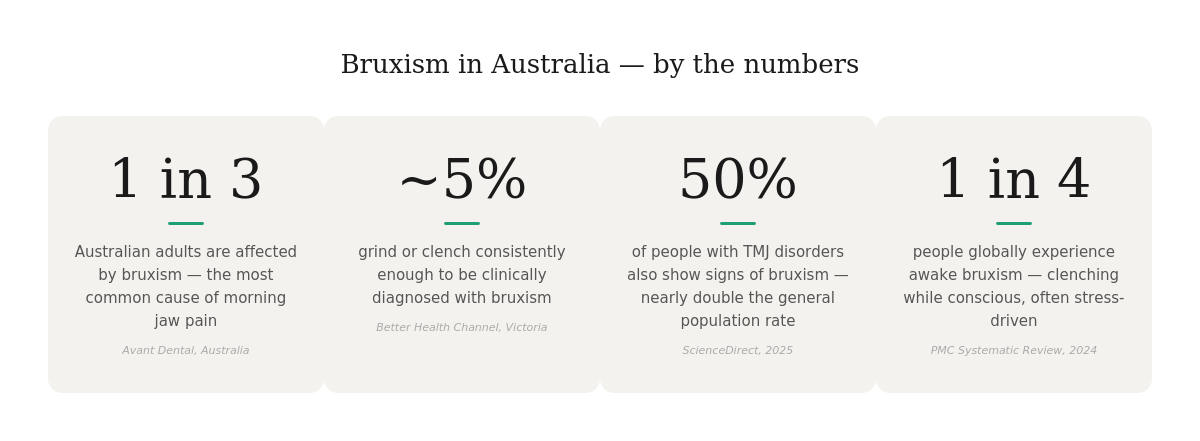
Why mornings specifically?
This is the question that confuses most people. If the jaw joint or muscles are the problem, why doesn't it hurt all day? Why is the pain worst right after waking?
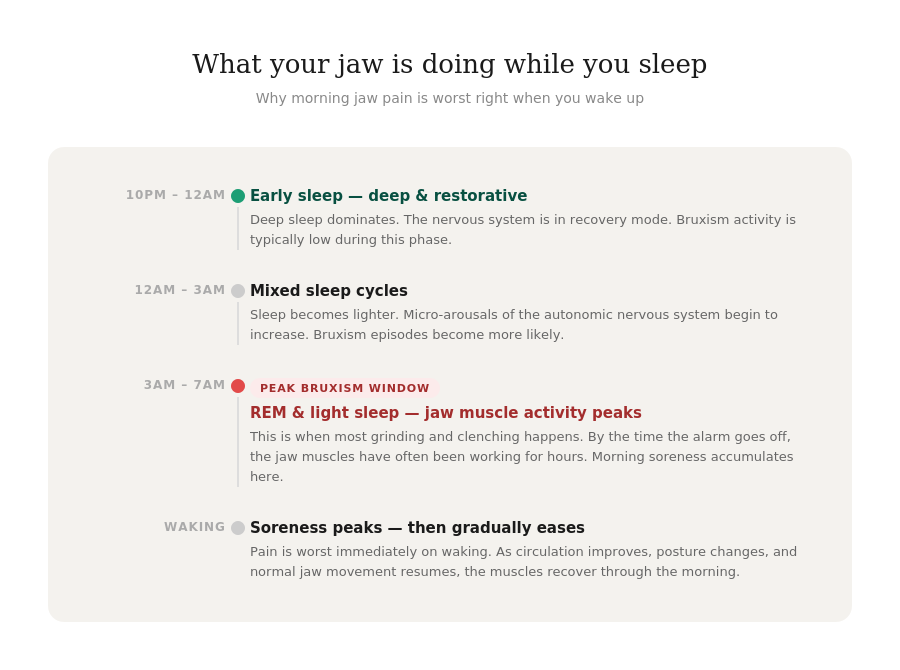
The answer lies in what your jaw is doing while you sleep - and when. Sleep bruxism (teeth grinding or clenching during sleep) tends to peak during the lighter stages of sleep, particularly in the early morning hours as your body cycles toward waking. By the time your alarm goes off, your jaw muscles may have been working hard for hours without you knowing. The soreness, achiness, and stiffness you feel at 7am is essentially post-exercise fatigue - in muscles you didn't intentionally use.
Why it eases during the day: Once you're upright and active, increased blood flow, normal jaw movement, and the warmth of chewing help the muscles recover. This is why morning jaw pain often seems to "disappear" by mid-morning - and why people underestimate how significant it is.
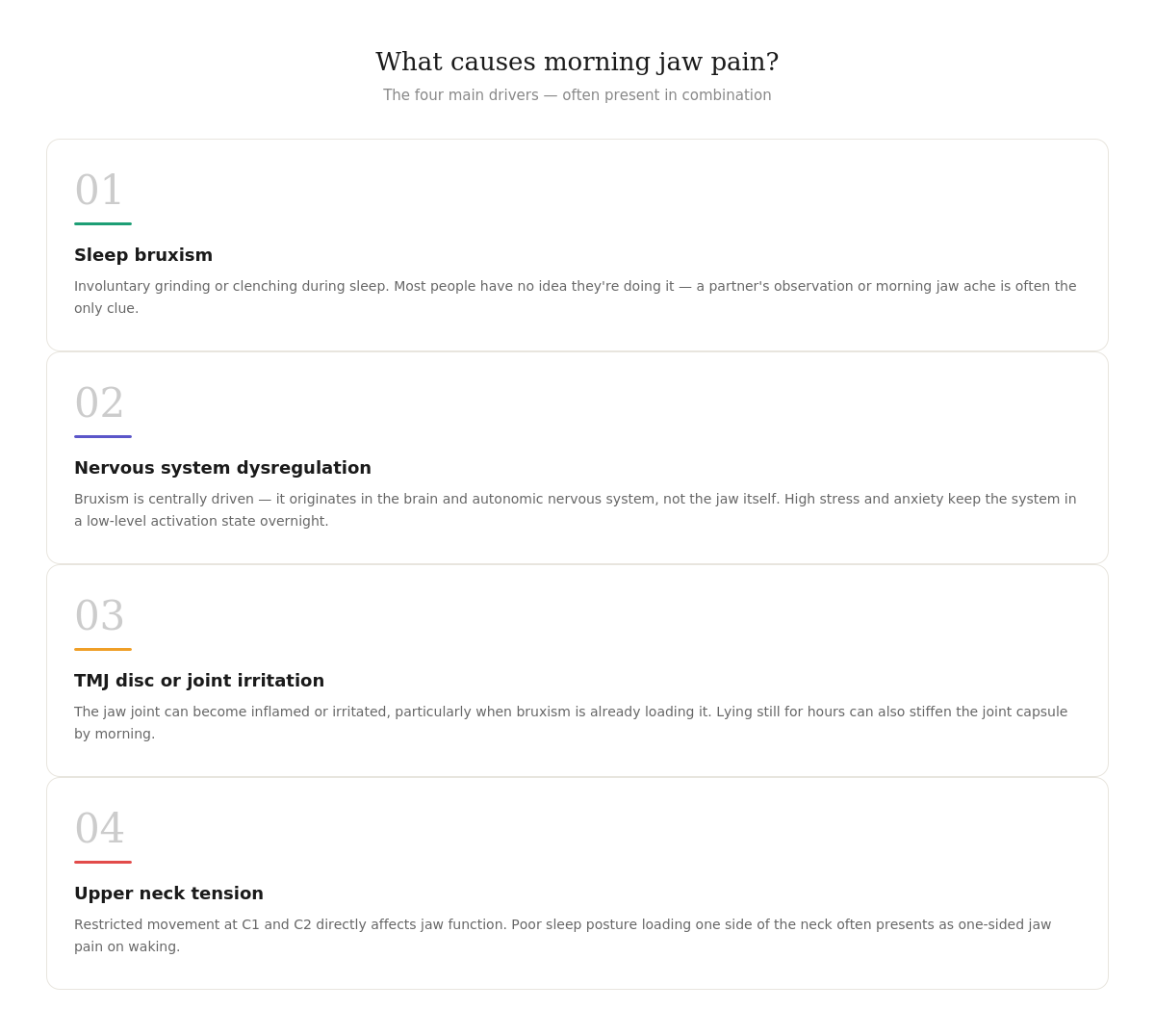
What causes it - the four main drivers
The nervous system piece — why this isn't just a jaw problem
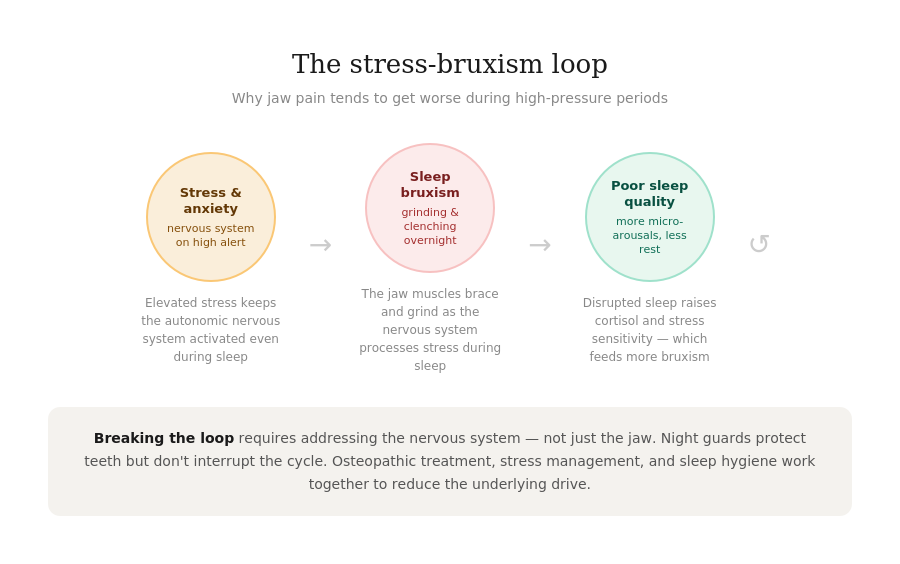
This is the part most people and many practitioners miss. Bruxism is not a mechanical jaw problem. It is a centrally mediated phenomenon, meaning it originates in the brain and autonomic nervous system. When the nervous system is running at a heightened state of activation - due to stress, anxiety, poor sleep quality, or chronic pain elsewhere - the jaw muscles are among the first places that tension manifests physically during sleep.
Think of it this way: stress doesn't clock off when you do. Your nervous system continues to process the day's load while you sleep and for many people that processing involves muscular bracing - particularly in the jaw, neck and shoulders. Bruxism is essentially the body's nervous system keeping guard while you're unconscious.
What's happening through the night
Signs it's bruxism vs something else
Morning jaw pain doesn't always mean bruxism. Here's how to read the pattern:
Points toward bruxism: Soreness is worst on waking and improves during the day. You also notice headaches at the temples in the morning, tooth sensitivity or a partner has mentioned grinding sounds during the night. Stress or anxiety has been elevated recently.
Points toward TMJ joint irritation: Pain is more localised to one or both jaw joints (just in front of the ear), there may be clicking or catching and the jaw feels stiff rather than achy-tired.
Points toward neck involvement: Pain is one-sided and tracks up toward the ear or temple. You also notice neck stiffness on the same side. Sleep position may be a factor - people who sleep on their side often load the cervical spine unevenly overnight.
In practice, most people presenting with morning jaw pain have a combination of all three - which is exactly why an approach that addresses the jaw, neck and nervous system together tends to work better than treating any one piece in isolation.
What actually helps
Managing morning jaw pain means working on multiple levels simultaneously. From an osteopathic standpoint that includes releasing the soft tissue around the jaw and suboccipital muscles, restoring normal movement in the upper cervical spine and addressing the postural and breathing patterns that keep the nervous system in a heightened state.
Beyond hands-on treatment, the evidence points clearly toward stress and nervous system regulation as non-negotiable parts of any bruxism management plan. That might mean sleep hygiene, breathwork, reducing evening screen time, or working with a psychologist - the specifics depend on what's driving the load for you individually.
Night guards are often recommended and they do protect the teeth - but they don't address the underlying nervous system drive. Think of them as managing the consequence, not the cause.
The bottom line
Waking up with jaw pain every morning is your nervous system leaving you a note. It's common, it's treatable, and it almost always improves with the right approach — but that approach needs to address more than just the jaw. If morning soreness is a regular part of your routine, it's worth understanding why before it becomes a bigger problem.
Waking up sore every morning?
Find out what's actually
driving your jaw pain
A single osteopathic assessment can identify whether your morning jaw pain is coming from bruxism, your neck, your TMJ - or all three.
Then we build a plan that addresses the cause, not just the symptom. No referral needed.
Most patients notice improvement within 2–3 sessions
Jaw, neck & nervous system assessed together - No referral required - Addresses cause not just symptoms
Sources: Avant Dental Australia; Better Health Channel (Victoria); ScienceDirect 2025; StatPearls - Bruxism Management, NCBI.
This post is for general information only and does not constitute clinical advice. If you are experiencing jaw pain, headaches or sleep disruption, please consult a qualified healthcare professional.